

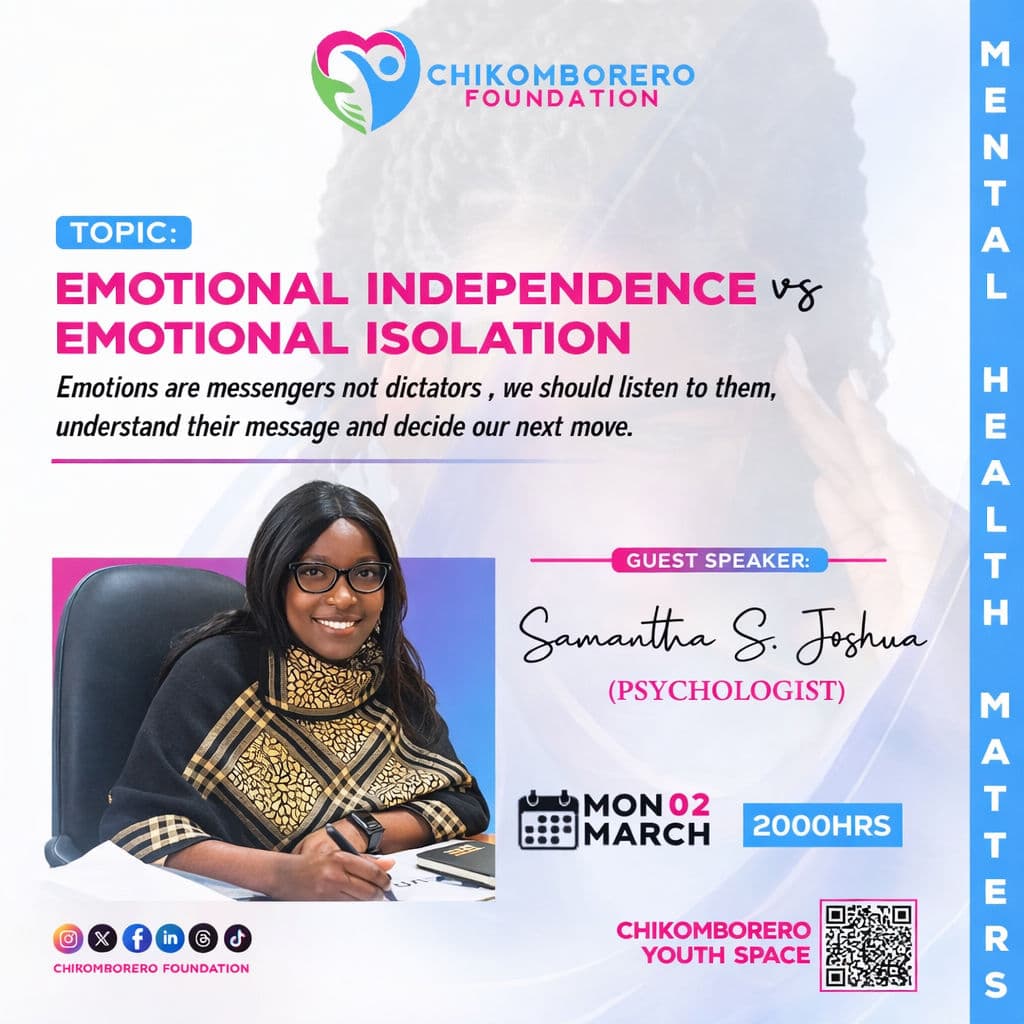


Chikomborero Foundation hosted a session on Emotional Independence vs Emotional Isolation, addressing a subtle but common challenge: many people live in emotional isolation without realizing it, mistaking it for strength.
The session explored how emotional independence is rooted in confidence and growth, while emotional isolation often stems from fear, past hurt, or discomfort with vulnerability. Participants reflected on the ways they approach asking for help and opening up, recognizing that difficulty in seeking support can signal isolation rather than independence.
Interactive reflections included:
- Words participants associate with independence (e.g., freedom, stability, strength)
- Words participants associate with vulnerability (e.g., fear, trust, exposure, peace)
- Honest self-assessment on difficulty in asking for help
Key insights from the discussion:
- Emotional armor may have protected individuals in the past, but over time it can restrict intimacy and connection.
- True maturity involves emotional flexibility, balancing strength with vulnerability.
- Emotional independence encourages growth and connection; emotional isolation limits meaningful relationships.
- Discernment is essential—knowing when it’s safe to let your guard down and share your authentic self.
The session featured Dr. Samantha Susan Joshua, a child psychologist and founder of the Mental Health Village Clinic. Dr. Joshua brings extensive experience in child and adolescent mental health, developmental psychology, and family therapy.
Overall, the dialogue encouraged participants to cultivate awareness, embrace emotional flexibility, and build relationships that are both safe and supportive.