


Chikomborero Foundation hosted a Mental Health Dialogue on Breaking Barriers: Improving Access to Mental Health Care, bringing together young people, community members, and mental health advocates to discuss one of the most pressing challenges facing mental health today—accessibility. The session explored why many individuals continue to struggle in silence despite the growing awareness of mental health issues, highlighting that awareness alone is not enough if people cannot access the support they need.
The dialogue emphasized that improving access requires a collaborative approach involving governments, healthcare providers, schools, faith-based organizations, community leaders, families, and young people themselves. Participants discussed practical solutions such as increasing mental health literacy, expanding community-based mental health programs, integrating mental health into primary healthcare, strengthening referral systems, investing in digital mental health platforms, training more mental health professionals, and promoting policies that make mental health services affordable and inclusive.
Key insights from the discussion included:
- Mental health care is a fundamental human right and should be accessible to everyone.
- Stigma continues to discourage many people from seeking professional support.
- Early intervention improves recovery and long-term well-being.
- Affordable, youth-friendly, and community-based services are essential for improving mental health outcomes.
- Raising awareness must be accompanied by practical action and investment in mental health systems.
- Communities play a vital role in creating supportive environments where people feel safe to seek help.
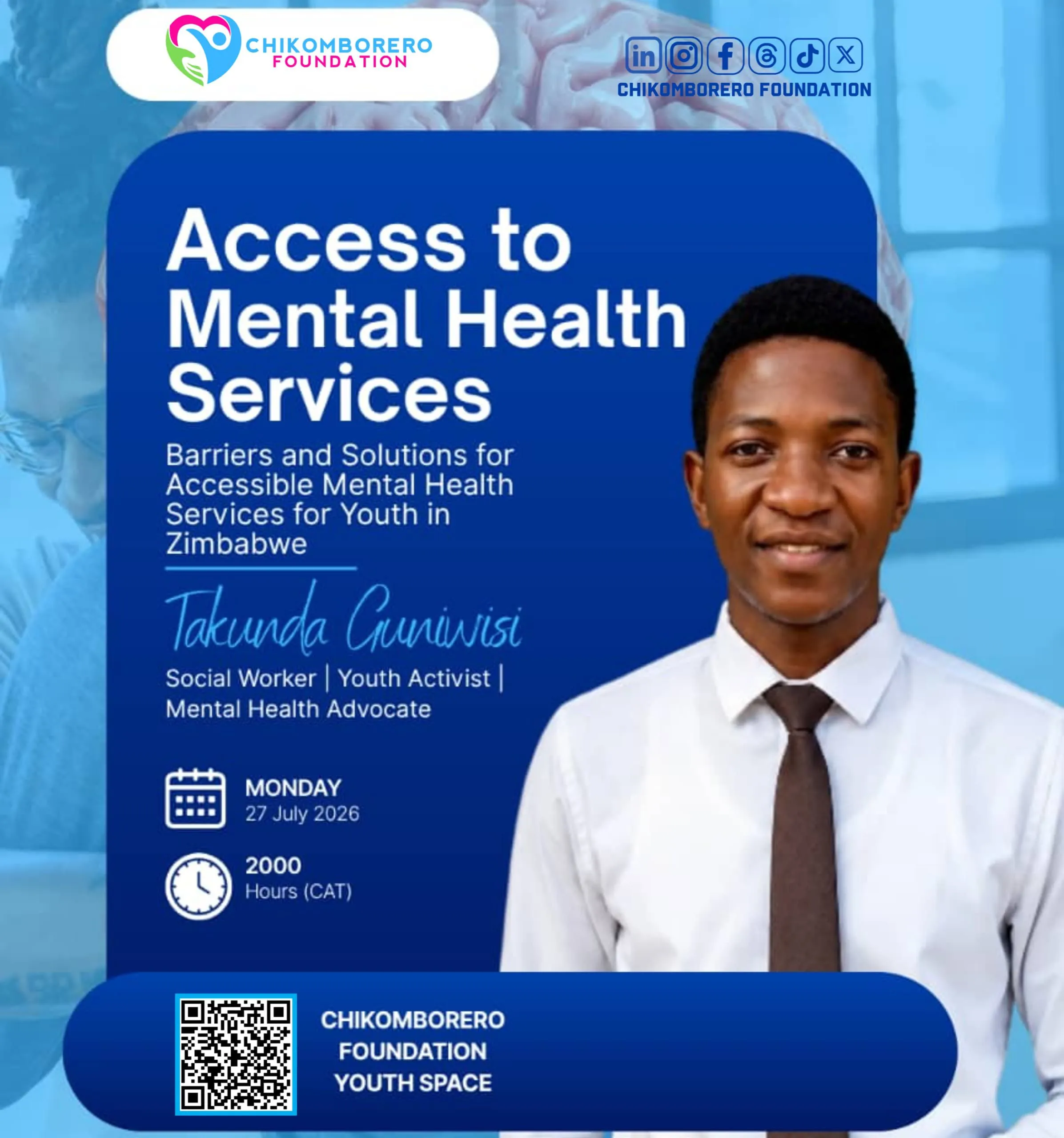
The session featured Takunda Guniwisi, who shared professional insights into the barriers affecting access to mental health care in Zimbabwe and outlined practical strategies for improving service delivery, strengthening community support systems, and promoting equitable access to quality mental health services. Participants were encouraged to become advocates for accessible mental health care and to contribute towards building communities where no one is left behind.